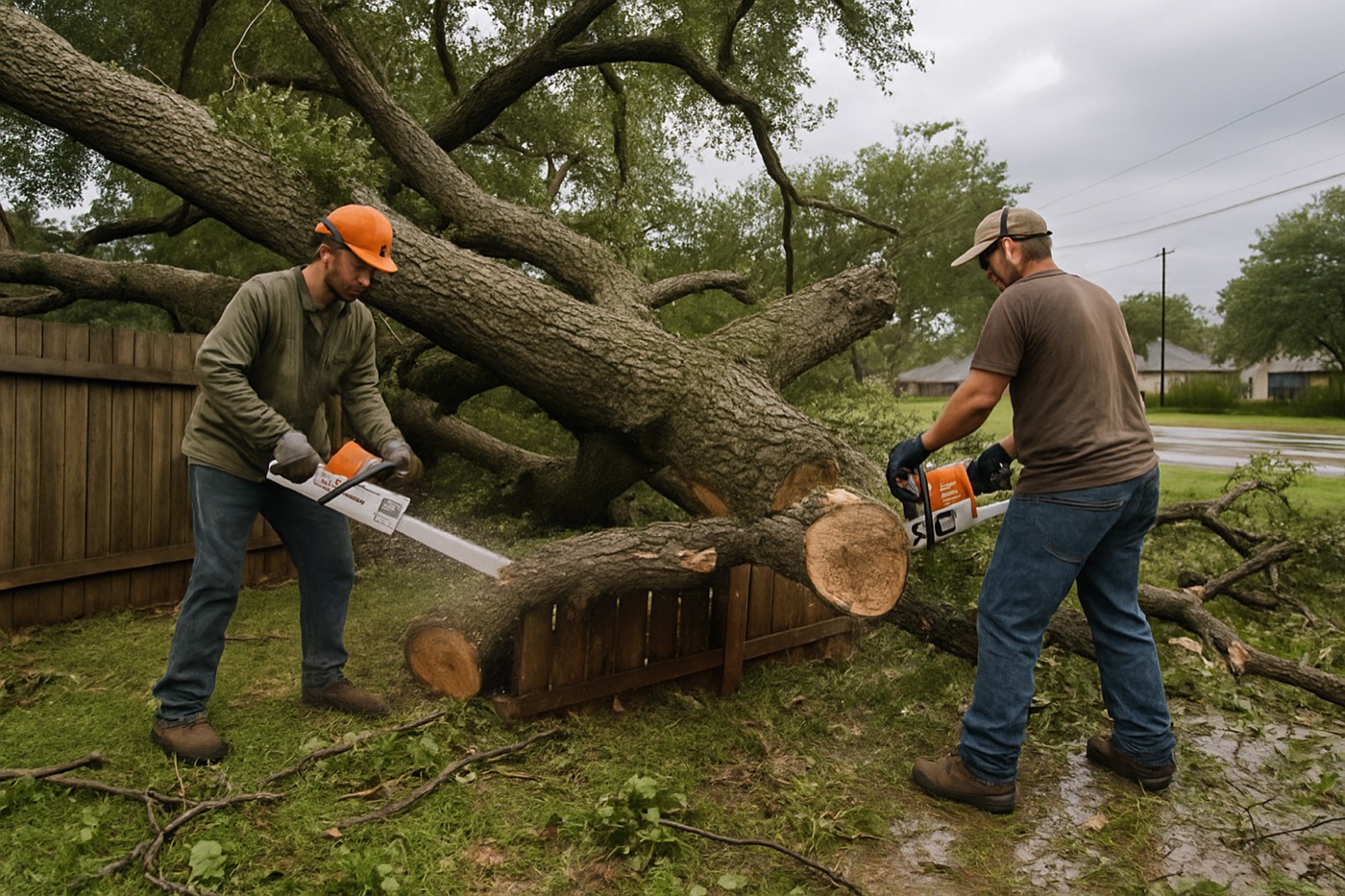
First hour: safety, then photos
Before anything else: if lines are down or in the tree, stay away and call the utility — City of Lockhart electric in town, Bluebonnet Electric in the county. An energized line under a canopy is invisible and lethal, and no tree crew touches line-involved trees until the utility clears them. Then, if it’s safe: photograph everything before anyone cuts — the tree on the structure, the room inside, wide shots, close shots. Your insurance adjuster wants the scene, not the cleaned-up yard. Tarp what you can reach safely; leave the rest for a crew with ropes and a plan.
What emergency tree work costs
Storm work runs on crew-hours: figure around $250 an hour for a full crew with saws, ropes and a chip truck, with after-hours and surge pricing adding 40–100% in the days after a big event — that’s market reality when every crew in the county has a two-week backlog. Getting a tree off a roof without making the hole worse is rigging work, sometimes crane work ($2,500–$4,500+ all-in). A hanging limb (“widow-maker”) made safe is often an hour or two. The same tree removed on a calm Tuesday in October would cost a third less — which is the whole argument for pre-storm deadwooding, but that’s next season’s advice; today’s job is making it safe.
Insurance: what’s usually covered
Homeowners policies generally cover removing the tree off a covered structure and repairing the damage — roof, fence if your policy covers it, the shed. Debris that fell in the open yard usually has minimal or no coverage. Practical playbook: photos first, call your carrier early (claims queue by the thousands after an outbreak), keep every receipt including tarps, and get the tree crew’s invoice itemized — “removal from structure” and “debris haul-off” as separate lines, because they’re often covered differently. Crews that work storms regularly write invoices adjusters can read.
The post-storm predators
After every event, out-of-town rigs sweep Caldwell County knocking doors. Some are legitimate storm-chasers who do fine work; some take deposits and vanish; some do $4,000 of damage doing $1,500 of work. The filter is simple: certificate of insurance (liability AND workers’ comp) before a saw starts, a written price, no big cash deposits, and a local reference. A crew that works Lockhart year-round answers to this town’s word of mouth — that accountability is worth real money when your roof is the workbench.
Common questions
A tree is on my roof. What do I do right now?
Everyone out from under the damaged section, check for involved power lines (call the utility if so), photograph everything, then call a crew. Don’t climb up to tarp over a tree — the load is unstable until it’s rigged off. This is the one tree job where waiting for professionals is always right.
How fast can someone come after a big storm?
Life-safety and structure jobs get triaged first — a tree on a house jumps the line ahead of a tree on a fence. In a county-wide event expect the backlog to run days to weeks for non-emergency debris. Getting on a list early matters; so does being honest about whether your job is an emergency.
Will insurance pay for the cleanup?
Usually yes for removal off a covered structure plus the repairs; usually no or capped for debris that fell in the open. Document before cutting, keep itemized invoices, and ask the crew to separate “removal from structure” from “haul-off” on the bill.
The tree survived but lost big limbs. Now what?
Torn limbs get cleaned up with proper cuts back to the collar — and if it’s an oak, painted immediately, because storm wounds in spring are exactly how oak wilt finds new trees. A storm-damaged oak deserves a proper assessment; half a canopy gone changes the tree’s future.
Storm damage? Get a crew out.
Call (737) 265-1330 for urgent work, or leave the details and a local crew will call you back fast.
Got it — expect a call back shortly. If lines are involved, call the utility now.