What drives the price of a removal
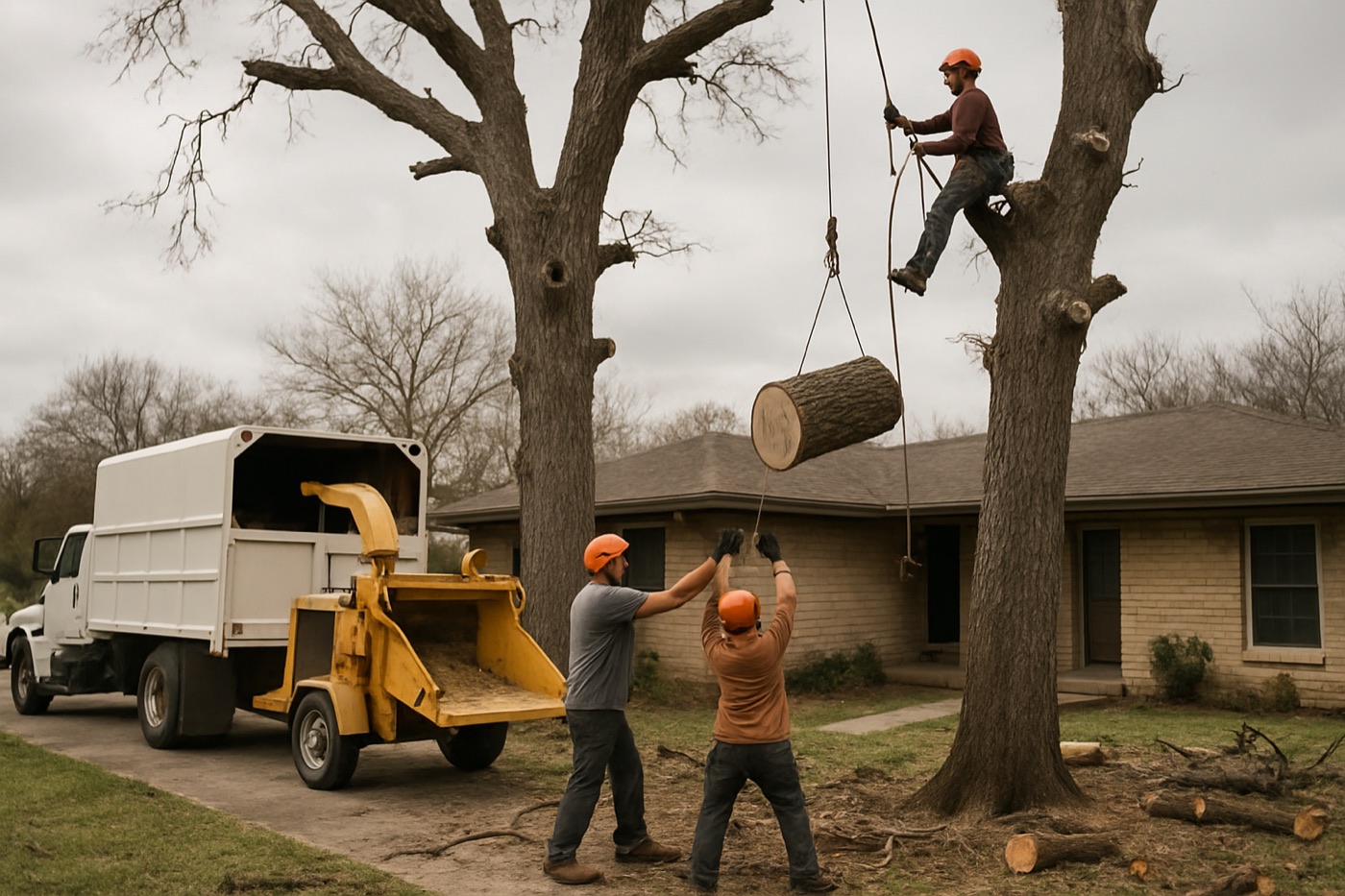
Three things: size, targets, and access. A 25-foot mesquite in an open pasture is a morning’s work — $250–$600. A 50-foot cedar elm between the house and the fence has to come down in pieces, roped and lowered, and that’s $600–$1,200. A big post oak or live oak with a canopy over the roof is climbing work all day with a ground crew catching every limb — $1,200–$2,200. And when the tree is dead enough that nobody should climb it, or the only way over the house is from above, a crane joins the job: $2,500–$4,500+, most of it crane time. Everything under and around the tree — pool, shed, septic tanks and lines (half of rural Caldwell County), landscape you care about — moves the number, because it changes how slow and controlled the work has to be.
Dead trees don’t wait well
A green tree bends and holds a climber; a dead post oak is a ladder made of pot metal. The longer a dead tree stands — and post oaks and red oaks go brittle fast in Texas heat — the more dangerous and expensive it gets, until it crosses the line where honest crews will only take it with a crane or a bucket. If a tree died this year, this year is the cheap year to remove it. It will never be cheaper again.
What should be in the bid
A real removal bid says what happens to the wood (hauled, or bucked and stacked for your firewood — hauling a big live oak is several trailer loads and real money), whether the stump is ground or left (grinding is typically $100–$400 as a separate line; ask, because “removal” alone means cut at the stump), what cleanup looks like (raked and blown, or a debris field), and proof of insurance — general liability and workers’ comp. Tree work is the most dangerous trade in America; a crew without comp coverage is betting your homeowner’s policy on their safety record.
One local wrinkle: check before you cut
If the tree stands near power lines, the utility — the City of Lockhart’s electric department in town, Bluebonnet Electric in much of the county — needs to be part of the plan; line-clearance work is its own certification and no ordinary crew should be in that tree. And if you’re removing a healthy oak just for convenience, ask about the oak wilt pruning calendar anyway — the cuts on neighboring trees and the fresh stumps matter. When in doubt, it’s a phone call, not a guess.
Common questions
How much does it cost to remove a big oak tree?
A large mature oak in a typical Lockhart yard runs $1,200–$2,200. If it’s over the house, dead, or otherwise crane work, plan on $2,500–$4,500+. Open-pasture trees with machine access come in cheaper than the same tree in a fenced backyard.
Is stump grinding included?
Usually not unless the bid says so — “removal” conventionally means the tree comes down and the stump stays. Grinding runs $100–$400 per stump depending on diameter. If you want the spot plantable or mowable, get grinding in the bid explicitly.
Can I keep the wood?
Yes — bucked-and-stacked is a common ask and can trim the haul-off cost. One exception: wood from an oak that died of suspected oak wilt should not be moved or stored unseasoned; the fungal mats under red oak bark spread the disease. Ask the crew; they’ll know what’s safe to keep.
Do I need a permit to remove a tree in Lockhart?
On private residential property there’s generally no county permit for tree removal in unincorporated Caldwell County. Inside city limits, call the city first if the tree is large or in an easement or right-of-way — five minutes on the phone beats a surprise. Utility-line trees always involve the utility.
Get a free removal estimate
Tell us where the tree is and what’s under it. A local crew will call you back — usually the same day.
Got it — expect a call back shortly to talk through the job and set up a look at the tree.